
 |
 |
 |
 |
 |
 |
 |
 |
 |
Past Profiles of Women in Research Labs
CRA-W presents profiles of women working in industrial and governmental research labs. This page archives previous "Profiles of the Month." The current profile is also available.
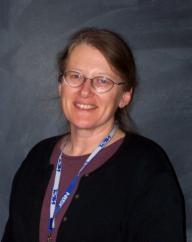
Isabel Beichl is a mathematician at NIST, the National Institute of Standards & Technology where she works on problems in computational science as part of an interdisciplinary team of scientists and engineers at NIST. Located in Gaithersburg Maryland, NIST develops standards for industry and does applied and fundamental scientific research. Isabel's work had been in the design of algorithms for simulation of physical systems and in Monte Carlo algorithms in general. More recently, she has been working on finding metrics to characterize the behavior of large networks, such as the Internet. She designs probabilistic methods to estimate solutions to otherwise intractable problems. She has worked on implementations on ``real'' machines, both sequential and parallel because the scientists that she works with need not only good ideas but running code. In practice, finding applications for existing methods has also meant development of new methods because real problems present many challenges that do not occur for the theoretician. Isabel is also the Editor in Chief of the magazine, Computing in Science and Engineering, a joint publication of the AiP and the IEEE Computer Society.
In every project she has been involved in, mathematics and computer science have made a major contribution. A few years ago she developed a simulation of self-avoiding random surfaces for a physics application where both probability and topology were of crucial importance for a viable solution. This, combined with an unusual application of data structures, enabled an approach that the physicists involved probably would have thought of.
Isabel has been at NIST for 20 years. With a PhD in mathematics from Cornell, she began collaborating with NIST scientists while she was teaching at a small liberal arts college nearby and went to NIST once a week for the intellectual stimulation of research. She obtained a visiting appointment for 1 year while on leave from the college and in 1989 was able to join the staff at NIST as a permanent employee. Prior to teaching she worked in UNIX development at Bell Labs for 2 years.
Outside of work, Isabel is an avid bicyclist and has made self-contained tours every year since 1983. She recently rode across the Alps with her husband. She also has a certificate in fine arts from the Maryland Institute and tries to practice the piano every day.
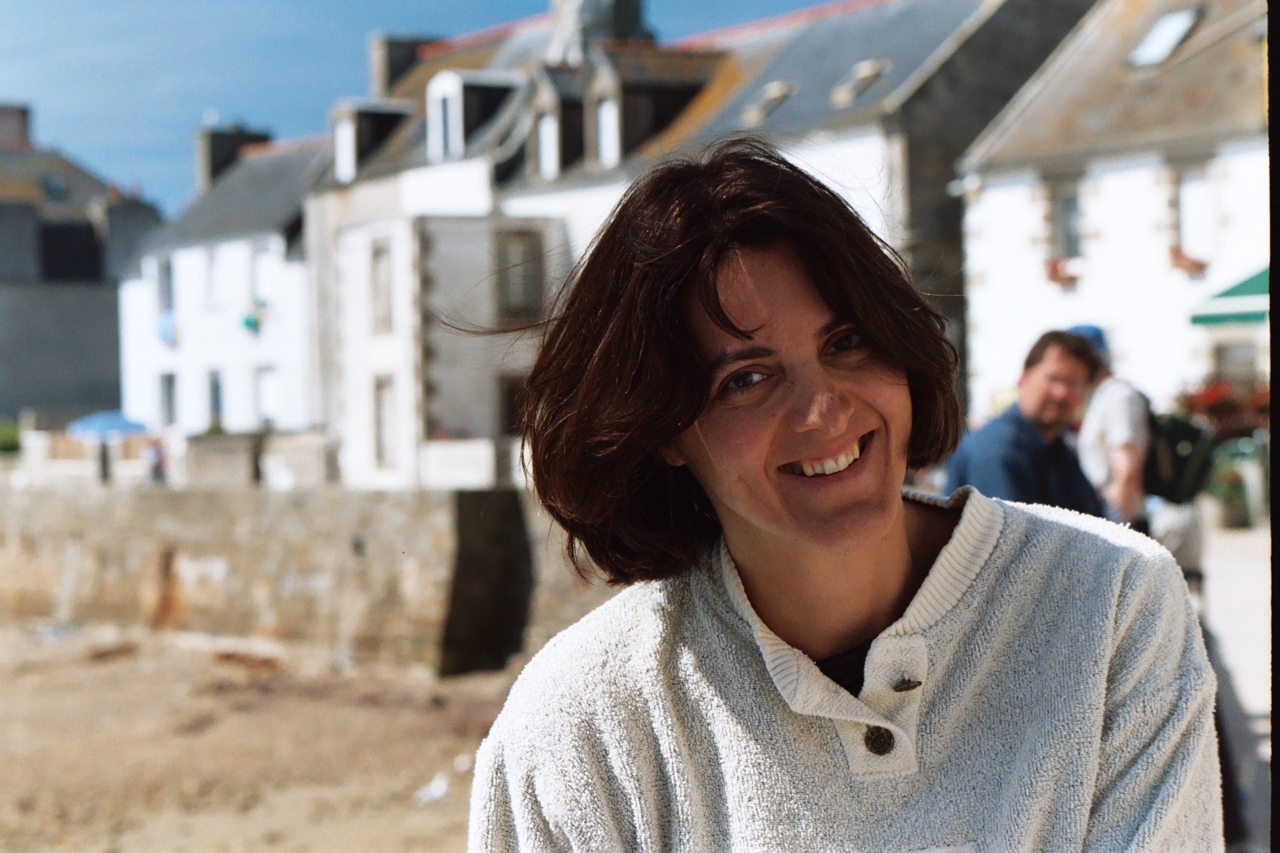
Nina Taft is a senior research scientist at Intel Research Berkeley.
Her research has focused on networking problems such as routing, protocol design, capacity
planning for ISP networks, and network reliability.
Nina's approach has centered on collecting Internet traffic measurements, characterizing the data, and using the information to better design networks. As such she has studied the application of both optimization and data mining to develop methodologies for data-driven network design. Nina is considered one of the pioneers of the field of Internet traffic matrix estimation, having contributed both first and second generation techniques as well as having developed applications for traffic matrix datasets, in the areas of security and routing. More
recently, Nina is working on security problems for enterprise networks, with an emphasis on end-host based techniques.
Prior to joining Intel, Nina was a researcher at Sprint Labs in Burlingame, CA. From 1994-1999, Nina worked at SRI International in Menlo Park, CA. She received her PhD degree in Electrical Engineering and Computer Science from the University of California at Berkeley in 1994. She is actively involved on various program and organizing committees. Nina was was the PC co-chair for the ACM SIGCOMM conference, held in Kyoto, Japan in 2007. She served as an associate editor for the IEEE Transactions on Networking (ToN) journal for 4 years , and is a member of the ACM Internet Measurement Conference steering committee. She has published over 50 technical papers, served on over 20 program and executive conference committees, and holds 10 patents.
Nina is the mother of twins that are in elementary school. She is passionate about her hobbies which include music (she plays both piano and violin), languages, cooking and traveling. She is a strong believer in the importance of work/life balance and feels that it is especially important for women not to be afraid to set an example in the corporate workplace. Accordingly, she makes sure that there is time in her busy life for her family and interests.
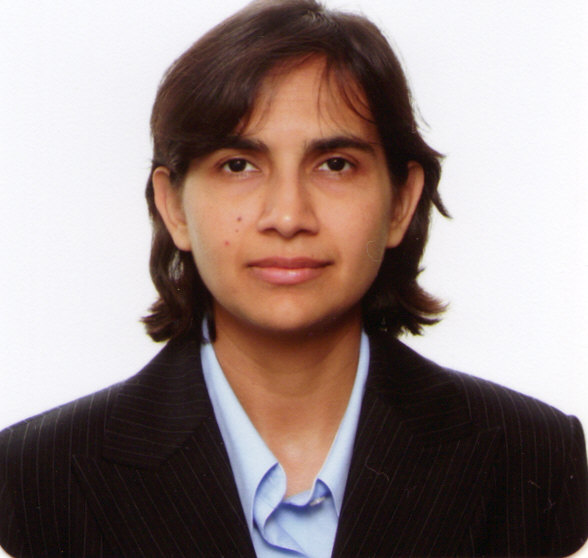
Sadaf Alam is a member of Scientific Computing group at the National
Center for Computational Sciences, the leadership supercomputing
facility at the Oak Ridge National Laboratory (ORNL), where she is a
primary liaison for computational biology groups that have won U.S.
Department of Energy Office of Science awards to perform breakthrough
science simulations in bio-energy and drug discovery fields. Dr Alam is
also a researcher in the Future Technologies group (Computer Science and
Mathematics Division at ORNL) that explores, investigates, and evaluates
next-generation computing, networking and storage technologies for
mission critical applications. Her research interests include
programming languages and models, and architecture for emerging high
performance computing (HPC) systems and performance studies of
supercomputing platforms and scientific HPC applications. She has
published and has served as a program committee member and reviewer for
international computer and computational science conferences and
journals. She earned her PhD in computer science degree from the
University of Edinburgh, United Kingdom in 2004. She is a member of
IEEE and IEEE Women in Engineering.
|

|
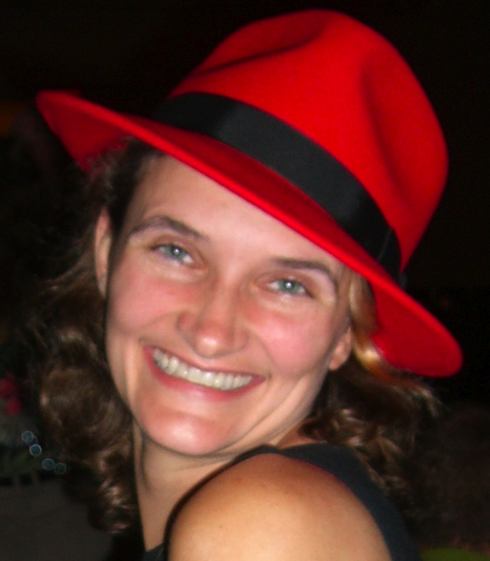
Carrie Gates is a Research Staff Member with CA Labs, where she is
responsible for identifying opportunities within the business units at CA
that can be transformed into research relationships performed in
collaboration with university, government and industry partners. Prior to
joining CA, Dr. Gates was an analyst with CERT, Carnegie Mellon University.
Before starting her PhD, Dr. Gates managed a systems administration team for
the Faculty of Computer Science at Dalhousie University, where she gained
operational experience in security deployment, intrusion response, and
collaboration with law enforcement.
Dr. Gates' primary research focus within CA is on enterprise-level security.
In particular, her recent focus has been on insider threat, policy
discovery, network traffic visualization and usability / usable security.
In the past she has done work in network security, large scale traffic
analysis, and testing methodologies for security algorithms. She has
written over thirty published articles and technical reports, and given
several invited talks.
Dr. Gates is actively involved on various program and organizing committees.
She was the general co-chair for the First International Symposium on Global
Information Governance, held in Pisa, Italy, in 2008. She is currently on
the program committees for the Annual Computer Security Applications
Conference (ACSAC), New Security Paradigms Workshop (NSPW), and the Workshop
on Visualization for Computer Security (VizSec). To maintain an operational
perspective, she has been a member of the security team for the
International Conference for High Performance Computing, Networking, Storage
and Analysis (SuperComputing) since 2005.
Dr. Gates received her PhD from Dalhousie University, Canada, in 2006.
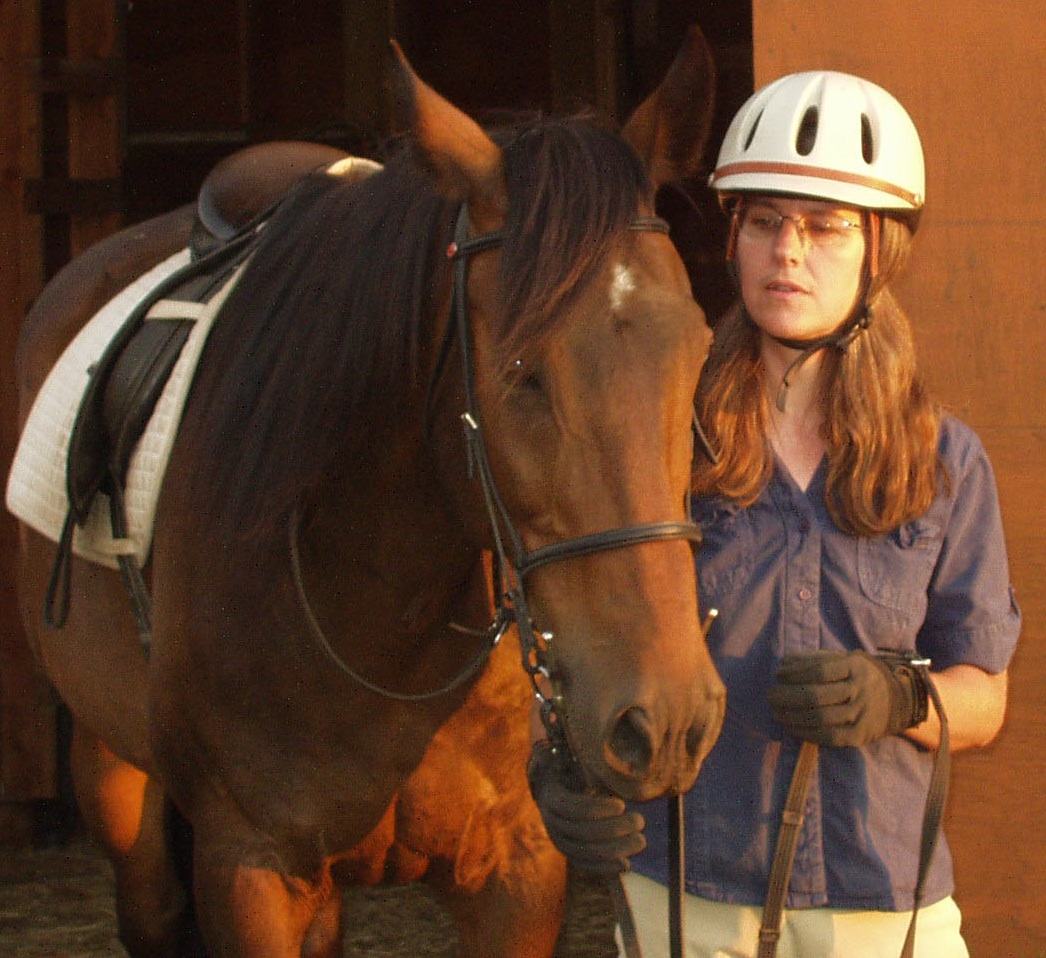
Deborah Frincke joined the Pacific Northwest National Laboratory in 2004 as Chief Scientist for CyberSecu
rity. Prior to joining PNNL, Dr. Frincke was a (Full) Professor at the University of Idaho, and co-founde
r/co-director of the U Idaho Center for Secure and Dependable Systems, one of the first such institution
s to receive NSAs designation of a national Center of Excellence in Information Assurance Education. She
is an enthusiastic charter member of the Department of Energys cyber security grass roots community.
Dr. Frinckes research spans a broad cross section of computer security, both open and classified, with a
particular emphasis on infrastructure defense and computer security education. She co-founded TriGeo
Network Systems, which was recently positioned by Garner in the Leaders Quadrant for security information
and event management. She has written over eighty published articles and technical reports.
Dr. Frincke is an active member of several editorial boards, including: Journal of Computer Security, the
Elsevier International Journal of Computer Networks, and the International Journal of Information and Co
mputer Security. She co-edits the Security Education Board column for IEEE Security and Privacy, along w
ith Matt Bishop. She is a steering committee member for Recent Advances in Intrusion Detection (RAID) an
d Systematic Advances in Digital Forensic Engineering (SADFE). She is a member of numerous advisory board
s, including the University of Washingtons Governing Board for the I-Schools Center for Cyber Security an
d Information Assurance and the State of Idahos NASA/EPSCOR Technical Advisory Committee.
Dr. Frincke received her PhD from the University of California, Davis in 1992.
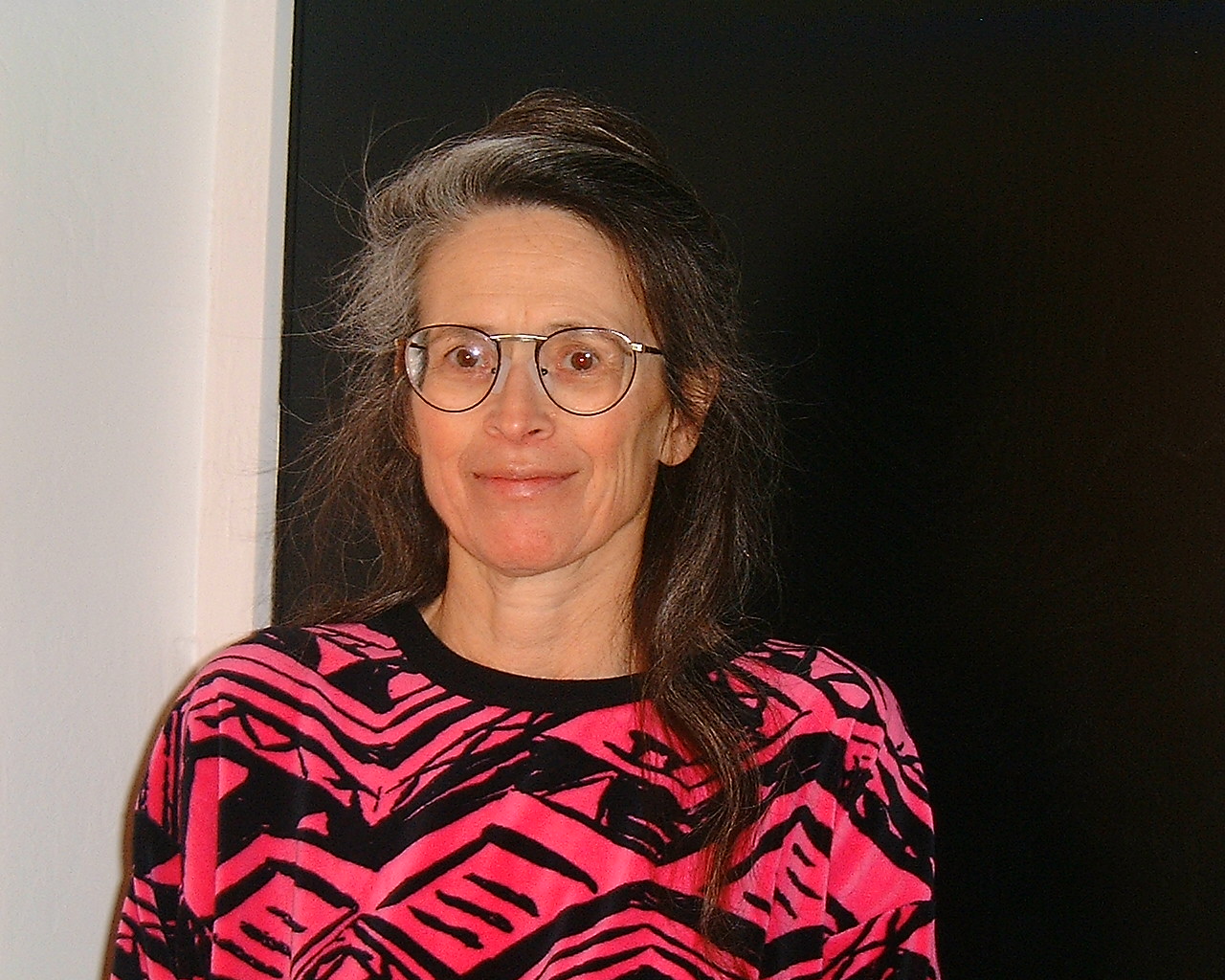
Carolyn Talcott is a Program Manager in the Computer Science Laboratory of SRI
International, where she leads the Symbolic Systems Technology group and the
Pathway Logic Project. Prior to coming to SRI, she was a Senior Research
Associate in the Computer Science Department at Stanford University. At SRI
Carolyn is leading research in symbolic systems biology, security protocol
analysis, and formal analysis applied to embedded systems and next-generation
networks. Symbolic systems biology involves using logical formalisms to
represent knowledge and theories about biological system and using formal
methods tools to analyze the resulting models and compare predictions to
experimental observations.
Carolyn is co-editor-in-chief the International Journal Higher-Order and
Symbolic Computation. She regularly serves on program committees of
international conferences, and co-organized several DARPA and NSF workshops. She
has given invited lectures at universities and research institutions in the US,
Europe, Australia, Japan, and Korea.
Carolyn holds a Ph.D. in Computer Science from Stanford University (1985) and a
Ph.D. in Chemistry from the University of California, Berkeley (1966). She has
over 20 years experience in formal modeling and analysis. For the last 6 years
she has also been working in symbolic systems biology. She is the (co) author of
more than 100 papers on topics including mathematics, theoretical chemistry,
semantics, actors, networks, and computational biology. She enjoys swimming and
playing the flute. She has one son who is now attending San Francisco State
University.
Janet Wiener is a Research Expert in databases and distributed systems at Hewlett-Packard Labs in Palo Alto, CA. She currently does research in and consults for HP's Neoview data warehousing product in the areas of query workload management, performance monitoring, and materialized views. While Janet started her career in databases at Wisconsin and managed research in data warehousing at Stanford from 1995-1998, she loves exploring different areas and she detoured into large distributed system projects for 8 years before returning to databases.
Janet's first industrial project at Compaq SRC in 1999 was a highly compressed hyperlink repository -- adopted by AltaVista -- which led to research on the structure of the Web. After Compaq merged with HP in 2002, Janet spent several years exploring how to make managing data centers easier, mostly through better scheduling of customer jobs and better performance monitoring and debugging, leading to faster identification of culprit machines or processes that cause problems.
Janet earned her Masters and PhD in Computer Sciences at the University of Wisconsin-Madison and her BA from Williams College. She enjoys playing games and reading with her husband Mark and their two children, ages 10 and 6. In her extra free time, she loves to dance, swim, and bike and is training for her first century ride next summer.
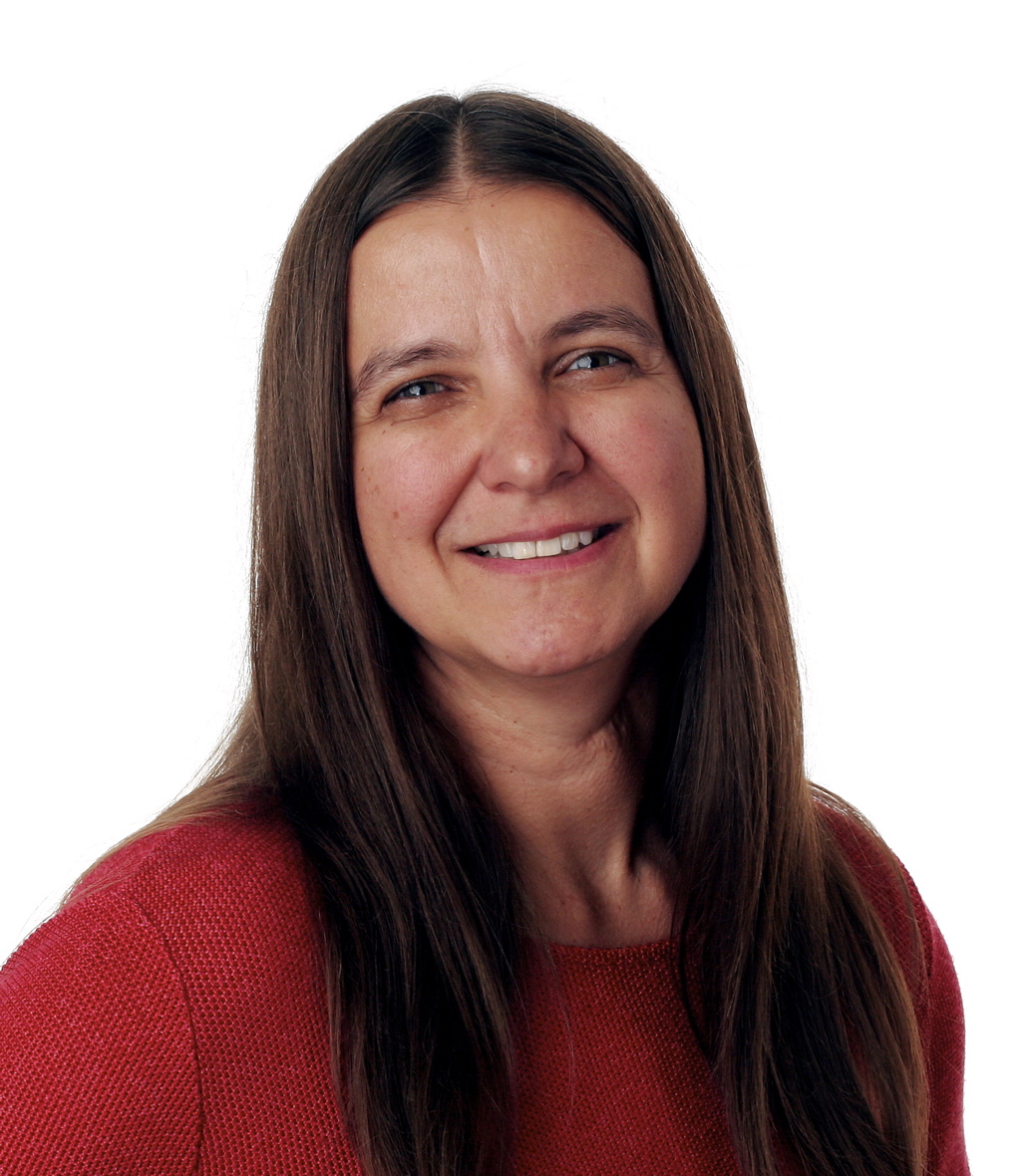
Joann J. Ordille is a consulting research scientist in the Software Technology Research Department of Avaya Labs. Her research focuses on creating new technologies that give us choice and power in how we communicate about what is most important and urgent to us. Joann leads the Rome Research Project in right time communication for the enterprise. Through Rome, she created notification and response, exception conferencing, and publish-subscribe services that are used within Avaya. She led an effort that incorporated many of these services into a new Avaya product for communication enabling business processes.
Joann was an early innovator in making it easier to search, integrate and use information available on the Internet for which she received the "10 Year Best Paper Award" at the Very Large Data Bases (VLDB) Conference in 2006. She invented meta-directories for which she received the "Best Paper Award" at the International Conference on Distributed Computing Systems in 1993. She then leveraged that work in creating the first prototype for the Avaya meta-directory product.
Joann is a member of the Board of the Computing Research Associations Committee on the Status of Women in Computing Research (CRA-W). She has given talks on the future of Internet technologies around the world as a featured speaker in the Bell Labs Seminar Series. She joined Avaya Labs at its birth in 2000 in a spin-off from Bell Labs and previously joined Bell Labs in 1993 after completing her Ph.D. in Computer Science at the University of Wisconsin-Madison. She also holds an M.S. in Computer Science from the University of Wisconsin-Madison, an M.A. in the History and Philosophy of Science from the University of Pittsburgh, and a B.A. in Applied Mathematics and Philosophy from The George Washington University in Washington, DC. Joann enjoys bicycling, open wheel auto racing, downhill and cross-country skiing, ice skating, scuba diving, and restoring Victorian houses.
Sihem Amer-Yahia has been a Senior Research Scientist at Yahoo! Research since May 2006. Prior to that, she worked for seven years as a Member of Technical Staff at AT&T Labs after receiving her Ph.D. in Computer Science from U. Paris XI-Orsay and INRIA, France in 1999. While at AT&T Labs, Sihem worked on XML storage, querying and full-text search. She was one of the main editors of the W3C XQuery Full-Text recommendation and implementor of GalaTex, its conformance implementation. Since joining Yahoo!, Sihem has been focusing on the role of structured data on the Web and the use of techniques at the intersection of databases, information retrieval and recommender systems. In LiveAds, she is looking at enabling the seamless serving of catalog listings and text ads in sponsored search. In GUESTS, she focuses on leveraging common behavior on social content sites to improve users' experience by serving them better content.
Sihem is a member of the editorial board of the Encyclopedia of Database Systems, Springer Verlag. She serves on program committees of major database conferences. She is co-chairing the Web 2.0 track at ICDE 2008 and chairing the database track at CIKM 2008.
Sihem's most recent keynote talks are "How Could We All Get Along on the Web 2.0? (The Power of Structured Data on the Web)" at DB/IR NYU Stern, Oct 2006, "What's Hot in working on New Technology: The power of having a user base" at the Grace Hopper Women in Computing Conference, San Diego, Nov 2006 and "GUESTS: Groups of UsErs going Social in web Two.0 Search" at WebDB 2007 in conjunction with the ACM SIGMOD conference.
VICTORIA STAVRIDOU-COLEMAN is a Vice President within the Corporate Technology Organization of Samsung Electronics. Victoria is in charge of the Computer Science Laboratory in San Jose, CA, which carries out research in next generation web technologies for CE devices and trusted platforms for CE devices.
Prior to coming to Samsung, she was Director for Security Initiatives for Intels Digital Enterprise Group (DEG) where she was responsible for defining the companys roadmap in terms of security innovations and for translating this roadmap to strategic action and product delivery. In this role, Victoria led the formulation of Intels security strategy across all Intels product lines including the mobility, home and digital health segments.
She was previously the Director of the Trusted Platform Laboratory (TPL) within the Corporate Technology Group CTG). Prior to that she was previously the Director of the Trust and Manageability Laboratory in CTG, where she drove innovation across platform trust & manageability for Intels desktop, enterprise and mobile platforms.
Before coming to Intel, Dr Stavridou-Coleman was with SRI International. She joined SRI in 1998 to head up the dependable systems architecture program after 10 years as a tenured professor in the University of London. She became the founding Director of SRIs System Design Laboratory (SDL) in the Information and Computing Sciences Division in 1999. In 2004, she founded the Cybersecurity Research Center on behalf of the Department of Homeland Security.
Victoria started her career with research positions at UMIST and the University of Manchester following which she was appointed to her first tenured faculty position (Lecturer) in the Department of Computer Science at Royal Holloway College, University of London in 1988. Her last tenured faculty position (Reader) was at Queen Mary College at the University of London.
Victoria holds a BSc in Electronic Computer Systems (Univ of Salford, UK), an MSc in Computer Aided Logic Design (Univ of Salford, UK) and a PhD in the Algebraic Specification and Verification of Digital Systems (Univ of Manchester, UK). She has authored more than 60 articles. She is a member of DARPAs Information Science and Technology advisory group.
Lisa Marvel is researcher with the U.S. Army Research Laboratory (ARL) at Aberdeen Proving Grounds, Maryland and an Adjunct Associate Professor with the Department of Computer and Information Sciences at the University of Delaware. She is a noted contributor to the fields of image steganography, data hiding, and tamper detection and she is a co-inventor of two patented image steganography techniques. Her current research focuses on methods to detect the presence of steganography in multimedia data. Lisas other research interests include multimedia compression, communications and mobile code technologies. She received her MS and Ph. D. degrees in electrical engineering from the University of Delaware and her B.S.E.E. degree from the University of Pittsburgh. She was a recipient of the General Electric fellowship for graduate studies in 1993 and was honored as the 1994 George W. Laird Fellow at the University of Delaware's College of Engineering. Lisa lives with her husband, Rich, their children, Owen, 5, and Erin, 2, and a menagerie of pets near Marylands Chesapeake Bay. She enjoys gardening, boating and traveling to new places.
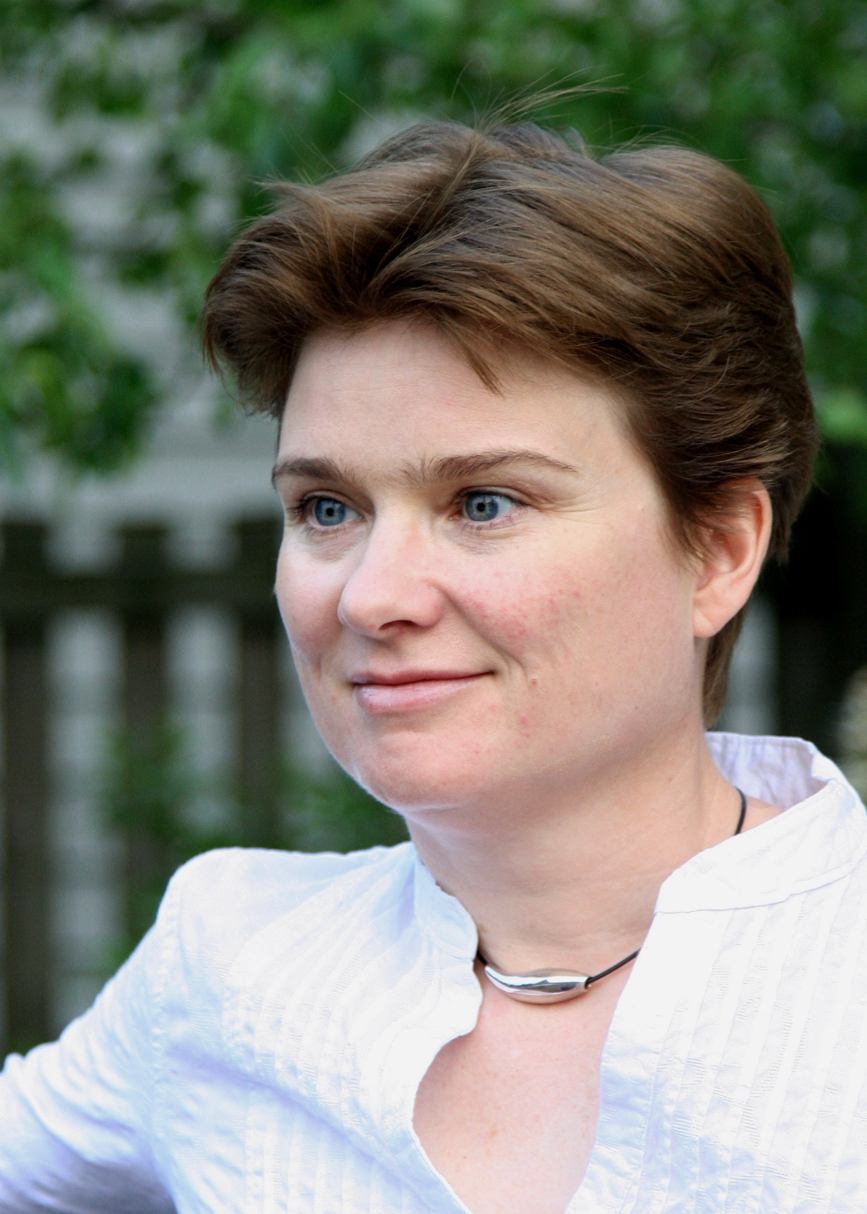
Kate Keahey is a Scientist in the Distributed Systems Lab at Argonne National Laboratory and a Fellow at the Computation Institute at the University of Chicago. Kates research interests include virtualization and resource management in distributed and Grid computing as well as high-performance computing. Her current activities focus on researching and developing new ways of provisioning and using resources in the Grid via the use of virtualization. She is currently leading the workspace project within the Globus Toolkit, a widely used Grid computing middleware. Kates past projects include co-authoring the WS-Agreement specification, an Open Grid Forum standards on resource management, as well as active participation on the Common Component Architecture (CCA) and work on high-performance extensions to the Common Object Request Broker Architecture (CORBA). Kate earned an M.S. and Ph.D. in computer science from Indiana University, and did her under graduate work at the Technical University of Gdansk in Poland. She is the co-organizer and program chair of the Virtualization Technology in Distributed Computing (VTDC) workshop and serves on multiple program committees, among others the usenix VEE, CCGrid and the ICSOC conferences. Kate lives with her family in Naperville, Illinois. She enjoys skiing, leisure travel, and gardening.
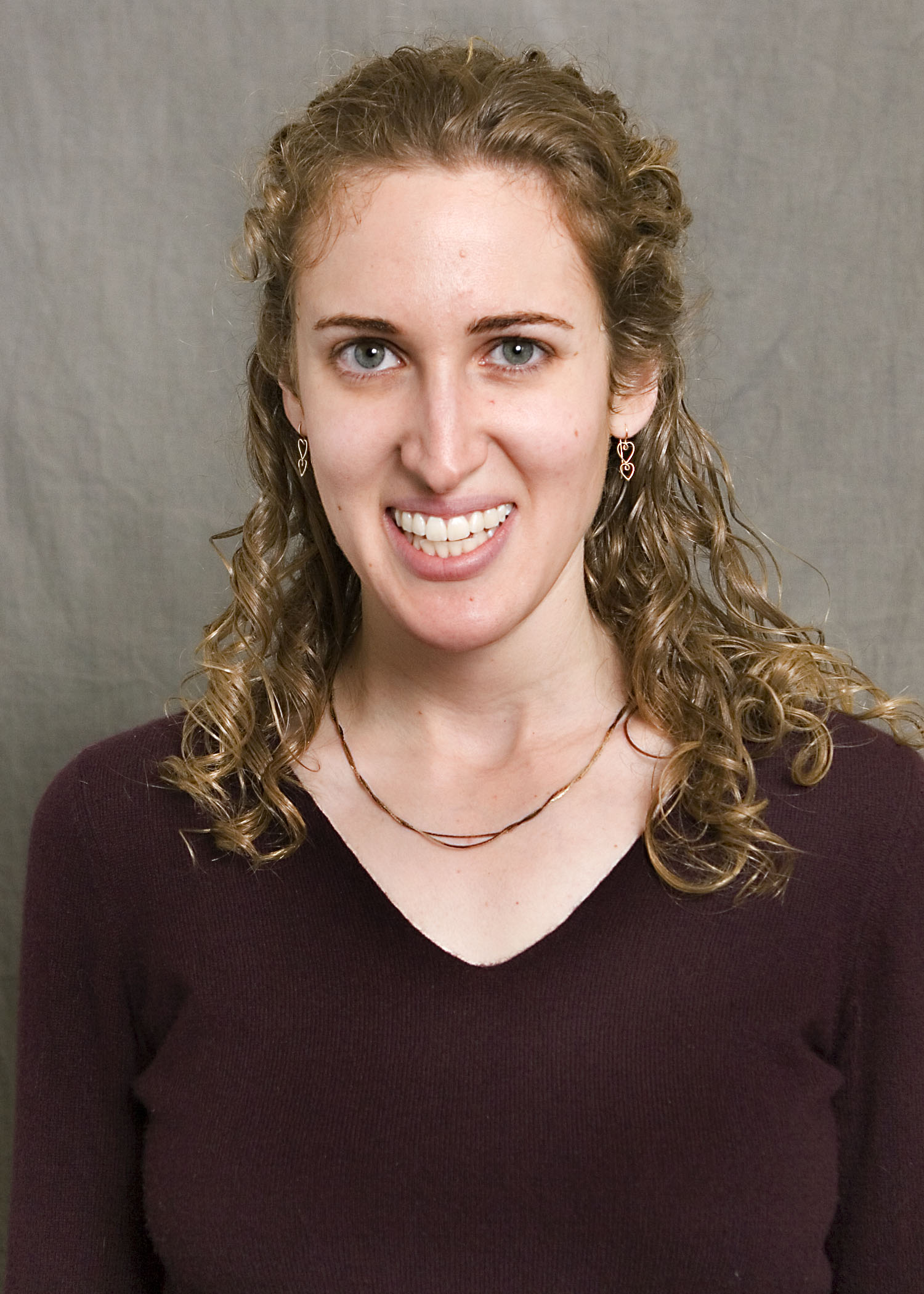
Meredith Ringel Morris is a Researcher in the Adaptive Systems and Interaction group at Microsoft Research in Redmond, Washington. Merrie's research interests include Human-Computer Interaction, Computer-Supported Cooperative Work, and Ubiquitous Computing. Recently, she has been working on the design, creation, and evaluation of interfaces for cooperative Web search. Other recent projects include the creation and evaluation of novel interaction techniques and interface designs for computationally-enhanced tabletops. Merrie earned an M.S. and Ph.D. in computer science from Stanford University, and an Sc.B. in computer science from Brown University. She is currently serving as co-chair of the Demonstrations program for the ACM CSCW 2008 conference, and as a program committee member for the 2007 ACM UIST and IEEE TableTop conferences. She lives in Bellevue, Washington, with her husband, Dan, and her golden retriever puppy, Zoe. She enjoys travel, photography, baking (and eating!) cookies, and teaching Zoe how to swim in Lake Washington.
Sharon Perl is a Staff Engineer in the Infrastructure and Systems group at Google in Mountain View, California. She works on building distributed systems that enable a variety of Google's user-facing services to be highly reliable, available and efficient. Sharon is currently technical lead for a new system for storing and serving large binary data (e.g., images, videos). She has also worked on software performance tools, and was the first technical lead on the Google Accounts system, which handles sign-on for all personalized Google services. Prior to joining Google in 2001, Sharon worked for 9 years as a researcher at the DEC/Compaq Systems Research Center. She earned her Masters and Ph.D. in Computer Science at the Massachusetts Institute of Technology, and her Bachelor's in Computer Science at the University of Pennsylvania. Sharon is currently serving on the program committee for the SOSP 2007 conference, and is helping to organize the first SOSP Women's Workshop in conjunction with SOSP in honor of the 20th anniversary of the Systers electronic community. This workshop is sponsored by CRA-W as one of its Discipline-specific mentoring workshops.
Sharon lives with her husband, Greg, and her 10-year-old daughter, Julia, in Palo Alto, California. Outside of work, she enjoys reading, baking, dancing, playing guitar, watching movies, listening to music, hanging out with friends and family, and learning about all kinds of new things.
Pamela J. Williams is a Senior Member of Technical Staff in the Computational Sciences and Mathematics Research Department at Sandia National Laboratories, Livermore, CA. Her research interests include large-scale nonlinear optimization and predictive analytics (data mining). Optimization strategies strive to find the best quantitative measure (commonly referred to as an objective function) of a system given a set of conditions that define an acceptable solution. Pamelas optimization research focuses on the algorithmic development of gradient-based methods to solve simulation-based optimization problems. In addition, she has been involved with a variety of data mining problems ranging from the development of computationally tractable pattern recognition methods to identification of immunological responses at the cellular level to heterogeneous sensor data fusion.
Pamela earned a B.S. in Mathematics from the University of Kentucky and received her Ph.D. in Computational and Applied Mathematics from Rice University. She has many interests outside work. She is an avid runner, who has completed five marathons and nine half-marathons. In addition to running, Pamela enjoys cooking, reading, and dancing.
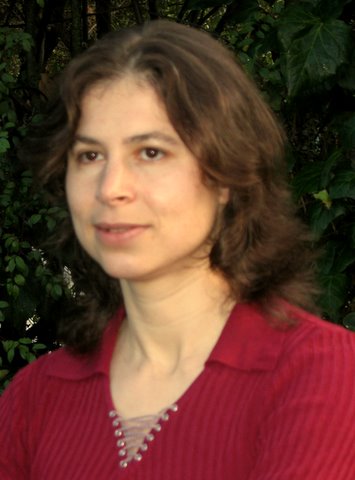
Tatiana Shpeisman is a senior staff research scientist in the Programming Systems Lab at Intel Corporation. Her current research focuses on new programming paradigms for multi-core architectures that would bring parallel programming into the mainstream. Her driving research interest is in finding ways to simplify software development while improving the program efficiency. She has worked on a diverse set of projects unified by this theme - software transactional memory, dynamic compilation and optimization for managed run-time environments, code generation for the IPF architecture and compiler support for sparse matrix computation.
Tatiana came to the United States from St. Petersburg, Russia. After receiving her Ph.D. in computer science from University of Maryland, College Park, in 1999 she joined Intel and moved to Silicon Valley. Tatiana is married and has a 9-month old son, who is not yet fluent in any programming language. Outside work Tatiana enjoys variety of interests. She is proud to have danced in a full-scale production of the Sleeping Beauty by the Western Ballet. She also enjoys backpacking above the tree line in the Sierras, and traveling around the world.

Diana K. Smetters is a Senior Member of the Research Staff at the Palo Alto Research Center (formerly Xerox PARC). Her research focuses on usability of security, and in particular how to design new cryptographic and security technologies that make it easier to build secure systems that real people can use. Other areas of interest include approaches to key distribution and key management, as well as security for mobile and wireless devices. Before joining PARC in 1999, she worked at CertCo, Inc , designing and building commercial systems to support high-security Public Key Infrastructures.
She received her B.A. in cognitive science from the Ohio State University, her Ph.D. from MIT in computational and experimental neuroscience, and did postdoctoral work at the Salk Institute and Columbia University.

Tessa Lau is a research staff member in the USER group a t IBM's Almaden Research Centerin San Jose, CA. Her work centers on intelligent user interfaces, a cross-disciplinary field that sits at the intersection of artificial intelligence and human-computer interaction. She is currently serving as Program Co-chair of IUI 2007, the international conference on intelligent user interfaces.
Tessa's research focuses on programming by demonstration, where the goal is to enable regular end users to automate routine tasks simply by demonstrating to the computer what it should do. More generally, she is interested in finding patterns in human behavior and human-centric information and building tools that exploit these patterns to enable people to do more with less work.
After completing a PhD at the University of Washington in 2001, Tessa spent four years at IBM's T.J. Watson Research Center just north of New York City. She moved to California in late 2005 to join the USER group and to be closer to family and friends. Outside of work, Tessa pursues a variety of interests including knitting, sewing, going to rock concerts, and flying remote-controlled model airplanes.
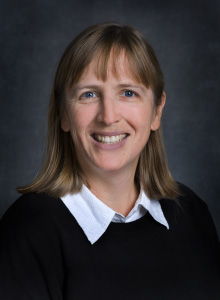
Ann Almgren
is a staff scientist in the Computational Research
Division at Lawrence Berkeley National Lab, working in
computational fluid dynamics. She focuses primarily on numerical
simulation of low-speed fluid flow, such as that in the very early
stages of a Type Ia supernova prior to ignition. Her research
interests are in the development and implementation of specialized
algorithms that exploit the mathematical character of the equations
and run efficiently on thousands of processors. She earned her
Ph.D. in 1991 in the Mechanical Engineering Department at U.C.
Berkeley, then spent one year as a visitor at the Institute for
Advanced Study in Princeton, NJ. Following that she worked in the
Applied Math Group at Lawrence Livermore National Laboratory,
moving with her research group to LBL in 1996. Ann is married to
fellow researcher John Bell, and has identical twin daughters and a son in elementary school, and two step-children in college. Her main interest beyond work and family is soccer, both coaching and playing.
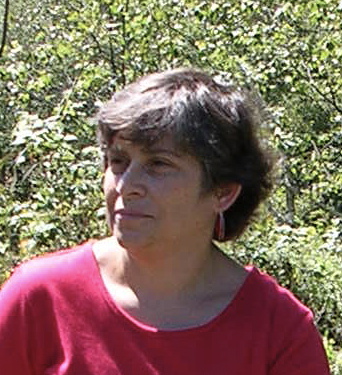
Susan Landau
is a Distinguished Engineer at Sun Microsystems Laboratories, where she concentrates on the
interplay between security and public policy. Before joining Sun, Landau
was a faculty member at the University of Massachusetts and Wesleyan
University. She and Whitfield Diffie have written Privacy on the
Line: The Politics of Wiretapping and Encryption. She is a member of
the National Institute of Standards and Technology's Information Security and Privacy
Advisory Board and she maintains researcHers, a mailing
list for women computer science researchers and the Booklist,
a list of computer science books by women computer scientists.
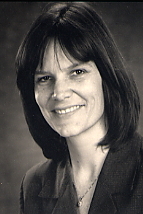
Kathleen Fisher is a Senior Technical Specialist at AT&T Labs Research. She received her Ph.D. in computer science from Stanford University in 1996. Her research focuses on domain-specific programming languages for processing data and the design, implementation, and theoretical foundation of object-oriented programming languages. She leads the PADS project designed to facilitate the management of ad hoc data. She currently serves as Vice Chair for SIGPLAN and as an editor for the The Journal of Functional Programming. Previously, she was program chair for the International Conference on Functional Programming (ICFP).
Kathleen is married to Robert Gruber, an engineer at Google. She has a 14-year old daughter Elaine, who is a freshman at Mountain View High School.